
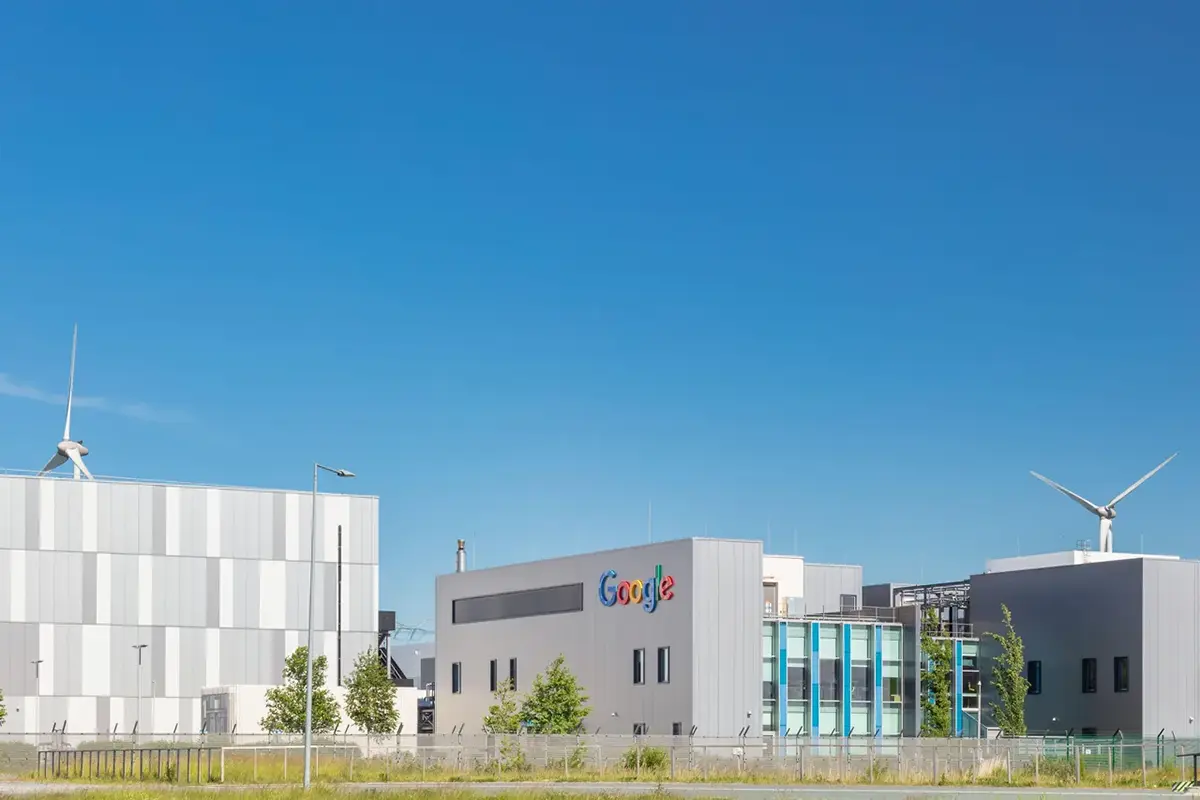

As data center expansion accelerates, water has become one of the most closely watched constraints in digital infrastructure planning.
Hyperscale operators such as Google and others are investing heavily in water stewardship—funding watershed restoration, improving cooling efficiency, and committing to replenish more water than they consume by 2030.
These are meaningful shifts.
But they also reflect something important about how the industry currently thinks about water:
It is still treated primarily as a supply problem.
What is missing is the other half of the system.
Not inflow.
Outflow.
This is where the concept of Drain Flow becomes critical.
1. The Current Model: Water as a One-Directional Resource
Most sustainability frameworks in digital infrastructure focus on a simplified model:
Today’s dominant view
Water Source → Data Center Use → “Consumption Accounting” → Replenishment
This model tracks:
- withdrawals from municipal or watershed systems
- evaporative losses from cooling
- net “water consumption” metrics
- offset or replenishment projects
It is clean, measurable, and reportable.
But it is incomplete.
Because water in real infrastructure systems does not end at “consumption.”
It continues moving.
2. The Missing Layer: Water Does Not Disappear
In reality, data centers operate as part of a much larger hydrological and municipal system.
After use, water becomes:
- heated effluent
- chemically treated discharge
- stormwater runoff
- blowdown from cooling cycles
- recycled but partially degraded reuse streams
And all of it must be handled somewhere downstream.
This is where the blind spot appears:
Most reporting systems stop at the moment of “use.”
Infrastructure reality begins there.
3. Defining Drain Flow
Drain Flow is the full downstream movement of water after operational use, including treatment, discharge, reuse, and system re-entry.
It is not just wastewater.
It is the entire second half of the water system.
Drain Flow includes:
- thermal discharge into receiving waters
- wastewater treatment load on municipal systems
- chemical and biological treatment cycles
- stormwater runoff from impervious infrastructure
- reuse loop overflow and saturation points
- downstream watershed impacts
If inflow is about sourcing, Drain Flow is about system throughput.
4. The Two-System Reality
Once you map both sides, the structure changes completely:
INFLOW SYSTEM
Water sourcing
Intake infrastructure
Cooling demand
Consumption metrics
IDATA CENTER
Thermal + Process
Systems
DRAIN FLOW SYSTEM

Wastewater treatment
Thermal discharge
Stormwater runoff
Reuse loop handling
Municipal constraints
The critical insight:
Most sustainability programs optimize only the top box.
But system stress often accumulates in the bottom box.
5. Why Drain Flow Becomes the Next Constraint
As AI workloads increase, data centers are evolving into:
- high-density heat systems
- continuous thermal management environments
- always-on cooling ecosystems
This changes the physics of water use.
The limiting factor is no longer only:
“How much water do we take in?”
But increasingly:
“How fast can we move water through the system without overloading downstream infrastructure?”
That is a throughput problem, not just a consumption problem.
And throughput problems always show up first in drainage systems.
6. Where Current Water Stewardship Falls Short
Even advanced water programs tend to focus on:
- water usage effectiveness (WUE)
- replenishment ratios
- watershed offsets
- recycling percentages
These are important metrics—but they are largely inflow-centered accounting tools.
They rarely fully integrate:
- municipal wastewater capacity
- thermal discharge accumulation across regions
- stormwater system load during peak expansion
- interconnection between multiple adjacent facilities
- cumulative downstream stress effects
In other words:
They measure what is taken, not what is carried away.
7. The Drain Flow Framework
The Drain Flow framework reframes water infrastructure into a continuous loop system:
Drain Flow Principle #1: Water is a circulating asset, not a consumed input
Water is temporarily used, thermally or chemically altered, then reintroduced into downstream systems.
Drain Flow Principle #2: Infrastructure risk concentrates in outflow systems
Treatment capacity, discharge limits, and stormwater systems often define real-world constraints before supply does.
Drain Flow Principle #3: Throughput matters more than static balance
The key question is not net usage, but system capacity:
How much water can safely move through the full system per unit time?
Drain Flow Principle #4: Downstream systems are fragmented and under-modeled
Inflow is centralized (utilities, contracts, intake systems).
Outflow is distributed:
- municipal treatment plants
- watershed networks
- regulatory jurisdictions
- private reuse systems
This fragmentation hides systemic stress until failure points emerge.
8. What Changes When You See the Full System
Once inflow and outflow are treated as one continuous system, the design priorities change:
- cooling design shifts toward closed-loop optimization
- wastewater becomes a design constraint, not a byproduct
- stormwater is treated as infrastructure, not compliance
- reuse systems become load-balancing mechanisms
- siting decisions incorporate downstream capacity, not just water availability
This is the shift from:
water usage management
to
water flow infrastructure management
9. Conclusion: The Industry Is Only Seeing Half the System
Water stewardship in data centers has made real progress.
But it is still primarily a conversation about what goes in.
As infrastructure scales, the defining constraint will increasingly be:
what happens after water leaves the system.
That is the Drain Flow problem.
And it is not secondary—it is the other half of the infrastructure equation.
The next evolution in water strategy will not come from better accounting of consumption alone.
It will come from understanding the full lifecycle of flow:
inflow, use, and outflow as one continuous engineered system.
Because water does not stop at the meter.
It keeps moving.
About DrainFlow
At DrainFlow, we help organizations better understand the water infrastructure systems that often remain hidden beneath the surface. From drainage and stormwater to water movement across entire facilities, greater visibility can help support resilience, compliance, and informed decision-making.